Trained to care.
Built to lead.
Since 1979, the UCTH School of Nursing has turned young Cross Riverians into professionally functional nurses — competent, compassionate, and ready for the wards of tomorrow.
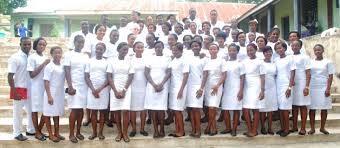
Forty-six years of preparing professional nurses
Training began in April 1979, when students were admitted jointly with the Cross River State Ministry of Health at the School of Nursing, St. Margaret Hospital Calabar — on the grounds of the College of Health Technology along Mary Slessor Avenue.
In November 2009, the School of Nursing of University of Calabar Teaching Hospital earned full accreditation in its own right — a milestone that formalised three decades of clinical training into a standalone institution.
"To transform the student nurse into a professionally functional nurse — competent, ethical, and ready anywhere in the world."
Today the school runs three well-equipped classrooms, a tutorial room, a demonstration room, a computer room, and a science laboratory — backed by an equipment store and library, with on-site hostel accommodation for the students who call it home during training.
Mission & vision
Two statements that shape every lecture, every ward round, and every student who walks through our doors.
Mission
To transform the student nurse into a professionally functional nurse, competent in providing qualitative nursing care globally — built on acquired knowledge, skills, attitudes, and ethics. We provide a high-quality, student-centred learning environment that promotes research, clinical practice, and community service through the nursing process approach.
Vision
To build a centre of excellence — in truth and indeed — that prepares excellent, functional nurses competent to deliver qualitative nursing care in any part of the world.
What every graduate carries forward
Six commitments that shape the curriculum, from first-year fundamentals to final clinical placement.
Whole-person practice
Harness cognitive, affective and psychomotor domains to function effectively within the nursing profession, anywhere, any day.
Professional skill
Teach student nurses professional skills grounded in a holistic view of the person, not just the presenting condition.
Empathy under pressure
Produce nurses who are dynamic, sympathetic, empathetic and versatile enough to cope with the real demands of the profession.
Applied science
Apply knowledge of biological, physical and behavioural sciences across assessing, diagnosing, planning, implementing and evaluating care.
A research mindset
Develop awareness of research in nursing among student nurses, with supervised projects that lay the foundation for lifelong inquiry.
Positive presence
Produce nurses who display a positive attitude toward patients, clients and communities, alongside every member of the health team.
A campus built for hands-on training
From lecture halls to the hostel kitchenette — everything a student needs is on site.
Three classrooms
Tutorial room
Demonstration room
Computer room
Science laboratory & reagents
Equipment store
Library
Reading room
Kitchenette
Cafeteria
Common room
Sick bay
Laundry
Admission requirements & procedure
Entry is by written entrance examination and interview — open to male and female candidates alike.
You'll need
- Full secondary school education with a Senior Secondary Certificate (or equivalent).
- Five credits at no more than two sittings, including Mathematics, English Language, Biology or Health Science, and two other subjects.
- Alternatively, a Diploma in Community Health or Certificate in Community Health Extension from an accredited institution may be considered.
- Written entrance examination, followed by an interview — both organised by UCTH.
The timeline
Forms go on sale
Entrance examination forms are sold each year across this window.
Entrance examination
The written entrance examination takes place.
Interview
Shortlisted candidates are interviewed; final selection follows.
Accept your offer
Sign and return the acceptance form. Offers lapse after two weeks and pass to the waiting list.
Resumption
Successful candidates begin training at the School of Nursing.
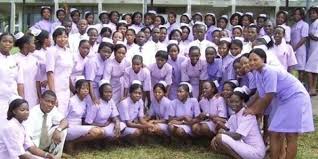
Arit F. Ironbar
At the helm of the School of Nursing, the Principal's office carries forward four decades of academic and clinical standards — from entrance examination to graduation pinning.
For enquiries about admissions, academic records, or partnership with the school, reach the Principal's office through the hospital's official contact channels below.
Contact the office